You Do Glute Bridges and Feel Nothing. Here's Why.
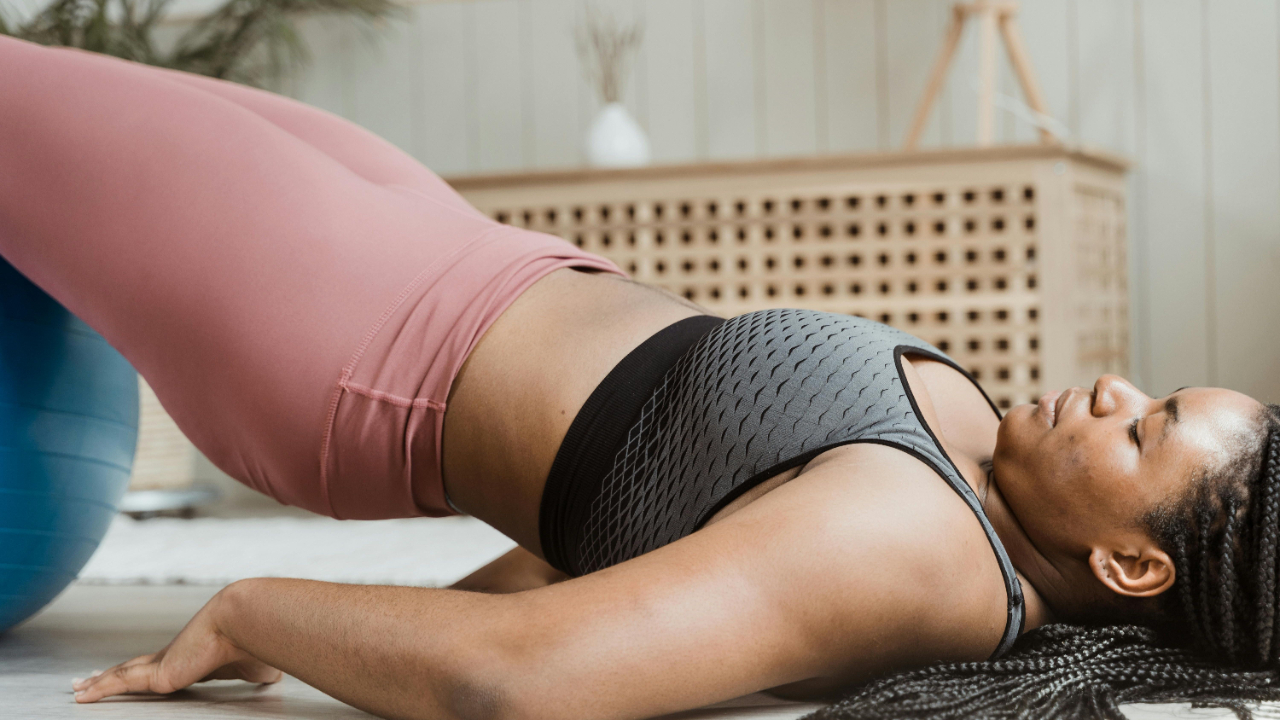
Apr 04, 2026You do bridges, squats, and hip thrusts. You're told to "squeeze your glutes." But you genuinely can't feel them doing anything.
And I mean NOTHING. Like, are they even there? Are they working? You have no idea.
So you keep doing more reps, trying harder, squeezing with everything you've got. And your low back starts screaming at you, your hamstrings cramp up, but your glutes? Still radio silence.
Your Glutes Aren't Weak Because They're Small
Here's what's actually happening: your glutes aren't weak because they're small or underdeveloped. They're weak because your brain doesn't know how to find them.
When you're hypermobile, your body compensates for loose joints by using whatever muscles it CAN sense clearly. Usually, that's your quads, your hip flexors, your low back - the big, loud muscles that your nervous system has no trouble locating.
Your glutes are trying to work, but your nervous system can't locate them well enough to engage them properly.
So you end up doing glute exercises using every muscle EXCEPT your glutes. Your lower back takes over. Your hamstrings cramp. And you feel nothing where you're supposed to.
This isn't a strength problem. It's a proprioception problem.
What Actually Helps
What Actually Helps
So what do you do about it? You can't just will your glutes into existence. (Believe me, if that worked, we'd all have figured it out by now.)
You have to teach your brain WHERE your glutes are and WHEN they're working.
Start with breathwork and hip mapping. Before you can engage your glutes, your nervous system needs to understand where your pelvis is in space and how to create stable pressure through your core.
Use visual tracking training and slow hip circles. Move slowly through small ranges, mapping where your hip actually is in space. This teaches your brain to locate your glutes before you ever ask them to work.
Use external cues instead of internal ones. Hypermobile brains are often kinesthetic learners and need cues about the outside world. Instead of "squeeze your glutes," try "press your feet into the floor" or "reach your tailbone toward the wall behind you." These external reference points give your brain something concrete to work with.
Build the stability foundation so your nervous system trusts it's safe to use your glutes. Sometimes your glutes won't fire because your brain doesn't trust that your pelvis and core are stable enough. Address the breathing and positioning first, and suddenly your glutes show up.
It Takes Time, and That's Normal
This takes time to build - progress today might look like actually feeling your glutes for the first time, which leads to safe and powerful squats three months from now. Each small step of awareness compounds into real functional strength.
But once your brain figures out where your glutes are and how to use them? Everything changes. Squats feel different. Walking uphill feels different. Even just standing feels more stable.
And you finally understand what people mean when they say "feel it in your glutes."
If you're dealing with this and want to learn how to actually map your body and build the proprioception your hypermobile joints need, that's exactly what we do at Rooted Movement.
Sign up for the Rooted Movement membership and get a free 14-day free trial.
Don't miss a beat!
New moves, motivation, and classes delivered to your inbox.
We hate SPAM. We will never sell your information, for any reason.